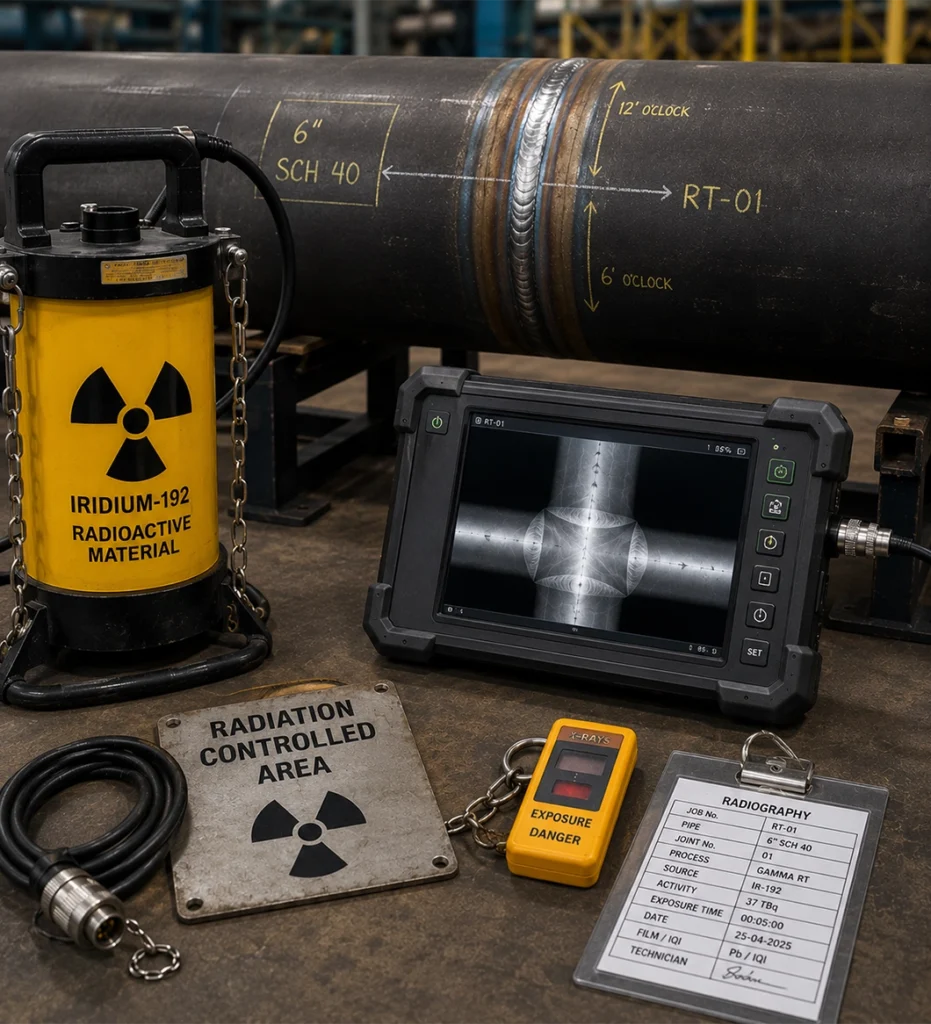
Radiographic Testing (RT) is one of the most reliable and widely used Non-Destructive Testing (NDT) methods for inspecting the internal quality and integrity of industrial components and welded structures without causing any damage to the material. The process uses X-rays or Gamma rays to penetrate the material and produce high-quality radiographic images that help identify hidden defects and discontinuities. In addition to conventional film radiography, Computed Radiography (CR) utilizes advanced digital imaging technology to deliver faster image processing, enhanced image quality, improved data storage, and efficient inspection reporting.
Conventional Gamma Radiography uses radioactive isotopes to produce high-quality radiographic images for inspecting welds and industrial components. It is widely used where electrical power is unavailable or where field radiography is required.
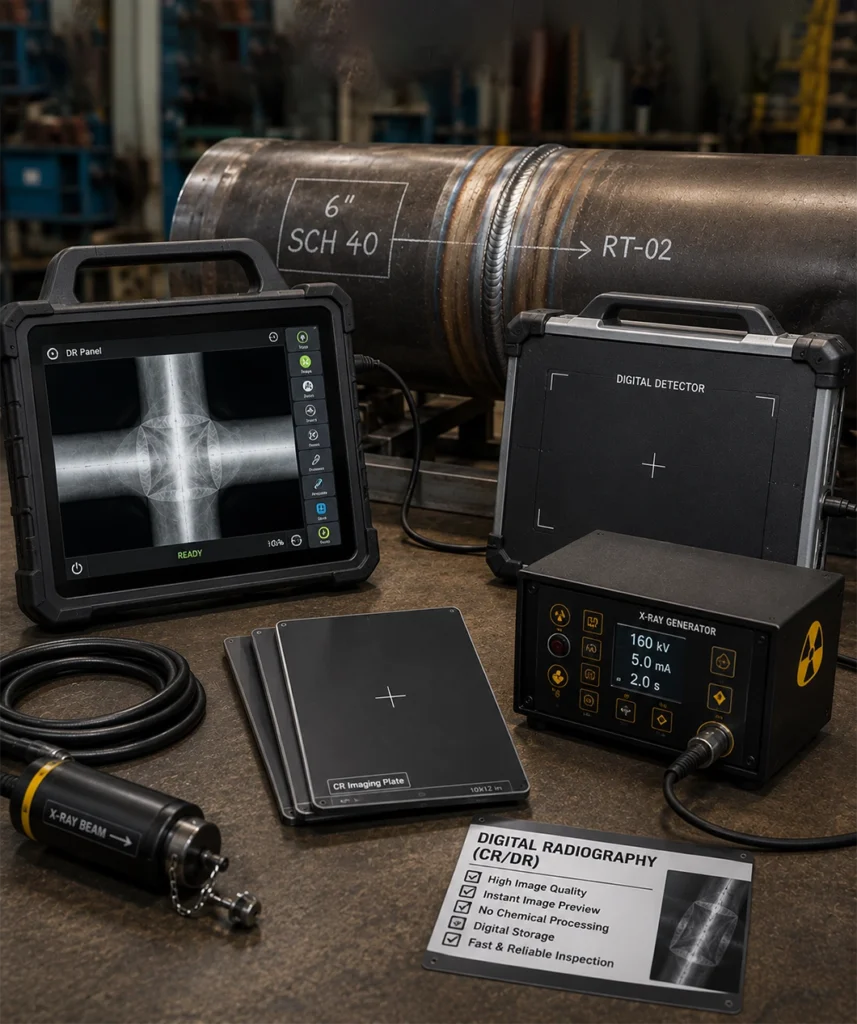
Digital Radiography provides faster inspection, superior image quality, and immediate image evaluation compared to conventional film radiography. It improves productivity while maintaining high inspection accuracy.
Digital Radiography (DR) uses flat-panel digital detectors to capture radiographic images instantly, enabling real-time inspection, rapid reporting, and enhanced defect analysis.
Computed Radiography (CR) utilizes reusable imaging plates instead of conventional films. The plates are processed using a CR scanner to produce high-resolution digital images that can be stored, enhanced, and shared electronically.
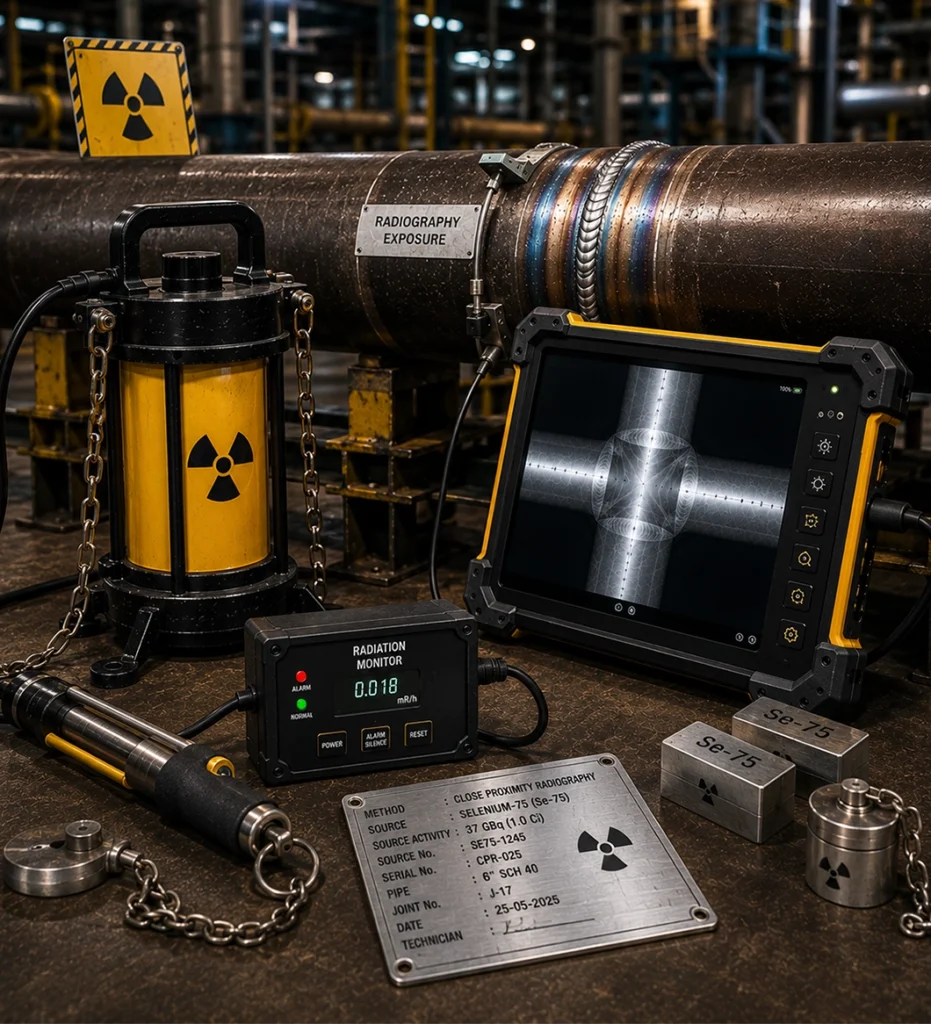
Close Proximity Radiography utilizes Selenium-75 (Se-75) as the radiation source, allowing high-quality radiographic inspection with significantly smaller controlled radiation areas compared to conventional gamma radiography. It is especially suitable for congested industrial environments where minimizing operational disruption is important.